When Minutes Matter Most: Why Emergency Rooms Are Failing People with IBD
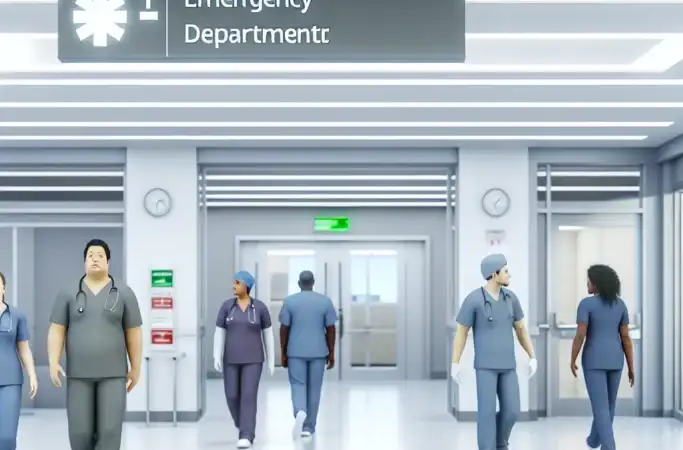
Picture this: You’re doubled over in excruciating pain, blood in your stool, and you know something is terribly wrong. You rush to the emergency room, hoping for relief, only to be told it’s “just stress” or given a prescription for antacids. If you’re living with inflammatory bowel disease (IBD), this scenario isn’t hypothetical—it’s a recurring nightmare that plays out in emergency departments across the country every single day.
Emergency rooms are consistently failing people with IBD, and it’s time we acknowledged this crisis for what it is: a systematic breakdown of emergency care that puts lives at risk.
The numbers don’t lie. Studies show that people with Crohn’s disease and ulcerative colitis visit emergency departments at rates significantly higher than the general population, yet they face longer wait times, more misdiagnoses, and inadequate pain management. This isn’t just about inconvenience—it’s about a healthcare system that fundamentally misunderstands one of the most complex and urgent chronic conditions of our time.
The stakes couldn’t be higher. When IBD flares escalate to emergencies, complications like bowel obstruction, perforation, severe bleeding, or toxic megacolon can develop rapidly. These aren’t conditions that can wait for a gastroenterologist appointment next week. They require immediate, knowledgeable intervention. Yet too often, emergency departments treat IBD patients as medical mysteries rather than individuals experiencing predictable complications of a well-documented disease.
The Emergency Room Reality Check
Walk into any emergency department in America, and you’ll find protocols for heart attacks, strokes, and trauma cases. These life-threatening conditions have clear, standardized response procedures that every ER physician knows by heart. But ask about IBD-specific protocols, and you’ll likely be met with blank stares.
This gap in emergency preparedness has reached a breaking point. Recent data from the Crohn’s & Colitis Foundation reveals that IBD-related emergency visits have increased by 30% over the past five years, while patient satisfaction scores for IBD emergency care remain among the lowest across all chronic conditions. The disconnect is glaring: more people with IBD need emergency care, but ERs aren’t equipped to provide it effectively.
The current situation is particularly troubling when we consider the demographic most affected. IBD typically strikes during the prime years of life—teens, young adults, and working-age individuals who should be building careers, starting families, and contributing to society. Instead, they’re trapped in a cycle of emergency visits that often end in frustration, delayed treatment, and worsening symptoms.
Dr. Sarah Chen, an emergency medicine physician at a major teaching hospital, recently shared her perspective: “We see IBD patients regularly, but I’ll be honest—most of us learned very little about IBD management during residency. We know the red flags for surgical emergencies, but the nuanced management of IBD flares? That’s not our strength.” This candid admission from a frontline provider illustrates the systemic knowledge gap that leaves IBD patients vulnerable during their most critical moments.
The Cost of Emergency Room Failures
When emergency departments fail people with IBD, the consequences ripple far beyond the individual patient. Let me be clear about what “failure” looks like in this context, because it’s not always dramatic—sometimes it’s insidiously subtle.
The most obvious failure is misdiagnosis. IBD symptoms can mimic everything from food poisoning to appendicitis, and without proper IBD-specific assessment tools, emergency physicians often miss the mark. A 2023 study published in the American Journal of Emergency Medicine found that 40% of IBD patients visiting emergency departments received an initial diagnosis that didn’t account for their underlying condition. This isn’t just an academic statistic—it’s 40% of people walking out of ERs with inappropriate treatment plans.
Then there’s the pain management crisis. People with IBD often require higher doses of pain medication due to tolerance built up over years of chronic illness, yet they’re frequently labeled as drug-seeking. The irony is devastating: the very patients who most need compassionate pain management are often viewed with suspicion. This creates a vicious cycle where people with IBD delay seeking emergency care until their conditions become life-threatening.
But perhaps the most damaging failure is the lack of care coordination. Emergency departments operate in silos, often failing to communicate effectively with patients’ gastroenterologists or IBD care teams. This means treatment decisions are made without crucial context about disease history, current medications, or recent changes in condition. It’s like trying to solve a puzzle with half the pieces missing.
The financial implications are staggering. When emergency departments fail to provide appropriate initial care, patients often return within days or weeks with worsened symptoms. This “revolving door” phenomenon drives up healthcare costs exponentially. A single IBD patient might visit the ER multiple times for the same underlying issue, racking up tens of thousands of dollars in charges while never receiving definitive care.
More importantly, these failures erode trust in the healthcare system. When you’ve been dismissed, misdiagnosed, or inadequately treated during a medical crisis, it fundamentally changes your relationship with healthcare. Many people with IBD report avoiding emergency care even when they know they need it, simply because past experiences have been so negative.
Addressing the Skeptics
Not everyone agrees that emergency departments are failing IBD patients. Critics of this perspective often point to several counterarguments that deserve serious consideration.
“Emergency rooms aren’t designed for chronic disease management,” some argue. They contend that ERs should focus on acute, life-threatening conditions, not the ongoing management of chronic illnesses like IBD. This perspective suggests that people with IBD should rely more heavily on their gastroenterologists and avoid emergency departments except in truly dire circumstances.
There’s some merit to this argument. Emergency departments are indeed designed for acute care, and expecting them to become IBD specialty centers might be unrealistic. However, this perspective misses a crucial point: IBD flares are acute medical events that can rapidly become life-threatening. When someone with ulcerative colitis develops severe bleeding or when a person with Crohn’s disease experiences a bowel obstruction, these aren’t chronic disease management issues—they’re medical emergencies.
Others argue that IBD patients are too demanding or have unrealistic expectations. Some healthcare providers suggest that people with chronic illnesses expect specialized care in every setting, which simply isn’t feasible. They point out that emergency physicians can’t be experts in every chronic condition.
This argument reveals a troubling attitude that blames patients for systemic failures. Yes, emergency physicians can’t be experts in everything, but that’s exactly why we need better protocols, decision-support tools, and care coordination systems. The solution isn’t to lower expectations—it’s to raise the standard of emergency care.
Finally, some contend that the healthcare system is improving and that these problems are being addressed through electronic health records, telemedicine, and better physician education. They argue that patience is needed while these improvements take effect.
While these technological and educational advances are promising, they’re not happening fast enough for the people who need emergency care today. Moreover, many of these improvements focus on general emergency medicine rather than the specific needs of IBD patients. We can’t wait for gradual system-wide changes while people continue to suffer from inadequate emergency care.
A Blueprint for Emergency Room Reform
The path forward requires systematic changes across multiple levels of emergency care. These aren’t pie-in-the-sky solutions—they’re practical, evidence-based interventions that could be implemented with proper commitment and resources.
First, every emergency department should implement IBD-specific protocols. These protocols should include standardized assessment tools that help emergency physicians quickly identify IBD complications, clear guidelines for pain management in chronic illness patients, and decision trees for when to involve gastroenterology consultants. The American College of Emergency Physicians should work with the American Gastroenterological Association to develop these protocols nationally.
Second, we need better integration between emergency departments and IBD care teams. This means creating systems where emergency physicians can quickly access patients’ IBD history, current medications, and recent test results. It also means establishing clear pathways for emergency gastroenterology consultation, even during off-hours.
Technology can play a crucial role here. Imagine if every person with IBD had a digital “emergency passport” that contained their key medical information, accessible to any emergency department. This could include their IBD subtype, current medications, known allergies, recent colonoscopy results, and contact information for their care team.
Medical education reform is equally critical. Emergency medicine residency programs should include mandatory rotations in gastroenterology, with specific focus on IBD management. Continuing medical education requirements should include regular updates on IBD emergency care. This isn’t about making every emergency physician an IBD expert—it’s about ensuring they have the basic knowledge needed to provide appropriate initial care.
Finally, we need to address the cultural issues within emergency medicine. This means training programs that help healthcare providers recognize and overcome biases against patients with chronic illnesses. It means creating environments where patients feel heard and respected, not dismissed or suspected.
The Emergency We Can’t Ignore
The failure of emergency rooms to adequately serve people with IBD isn’t just a healthcare problem—it’s a moral imperative that demands immediate action. Every day we delay implementing solutions, more people suffer unnecessarily, more trust in our healthcare system erodes, and more opportunities for life-saving interventions are missed.
This isn’t about perfection; it’s about basic competency. When someone with IBD arrives at an emergency department in crisis, they deserve more than a dismissive attitude and a prescription for antacids. They deserve evidence-based care delivered with compassion and urgency.
The solutions exist. The knowledge is available. What’s missing is the will to prioritize the emergency care needs of people with chronic illnesses. It’s time for emergency departments to stop treating IBD as a medical mystery and start treating it as the serious, manageable condition it is.
Because when minutes matter most, people with IBD deserve emergency rooms that don’t fail them—they deserve emergency rooms that save them.
Related Posts
New Case Study Reveals Why Capsule Endoscopy Could Be a Game-Changer for Early Crohn’s Diagnosis
April 9, 2026
New Research Reveals How IBD Creates Lasting Changes That May Increase Cancer Risk
April 8, 2026
Guselkumab Shows Promise for Specific Crohn’s Disease Patients: What This Means for Your Treatment Journey
April 7, 2026