AI Breakthrough Reveals How Two Proteins Could Protect Against Crohn’s
If you’re living with Crohn’s disease, you know that feeling when researchers announce another “breakthrough”—hope mixed with cautious skepticism. We’ve been promised so many potential solutions over the years. But sometimes, a discovery comes along that feels different, more concrete, more actionable. The latest research from Cambridge University might just be one of those moments.
For those of us in the IBD community, the promise of truly personalized medicine has always felt tantalizingly close yet frustratingly distant. This new study, however, represents something we haven’t seen before: artificial intelligence working alongside human expertise to uncover the specific biological mechanisms that could change how we prevent and treat Crohn’s disease.
Summary of Thebrighterside
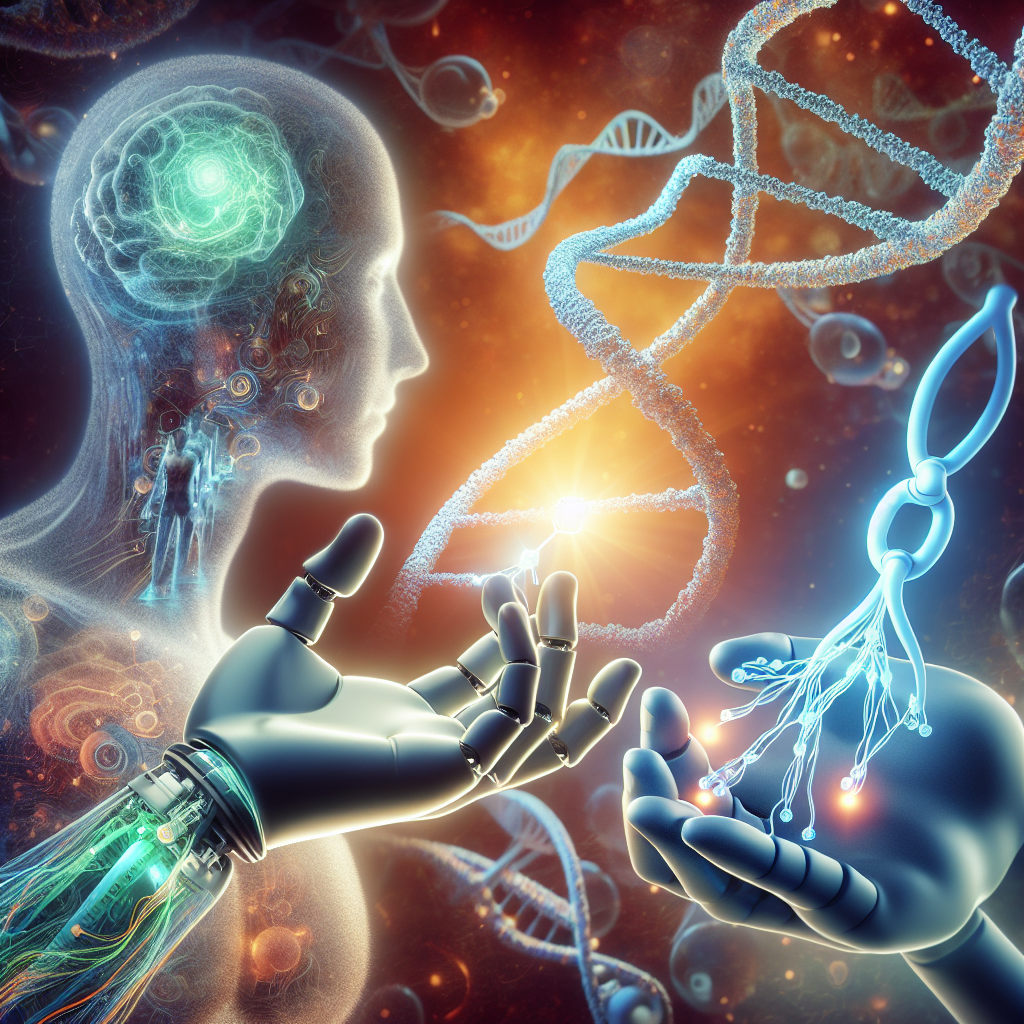
Researchers at the University of Cambridge have developed an AI model that analyzed vast amounts of protein and genetic data to identify key factors in Crohn’s disease development. The AI discovered two specific proteins—OSMR and GP130—that work together as a protective mechanism against Crohn’s disease. These proteins help control inflammation in the gut, which is the primary driver of Crohn’s symptoms.
The research found that patients with weaker interactions between these two proteins had a significantly higher risk of developing Crohn’s disease. This suggests a direct connection between how well these proteins work together and a person’s likelihood of developing the condition. Instead of traditional trial-and-error research methods, the scientists used advanced machine learning algorithms to quickly and accurately identify the exact biological pathways most important for Crohn’s disease.
The findings, published in Nature Communications, point toward innovative treatments that could target the OSMR-GP130 partnership directly. By enhancing this natural protective mechanism, future therapies might prevent or control Crohn’s disease more effectively than current treatment options.
This post summarizes reporting from Thebrighterside. Our analysis represents IBD Movement’s perspective and is intended to help patients understand how this news may affect them. Read the original article for complete details.
What This Means for the IBD Community
This research represents a fundamental shift in how we approach Crohn’s disease—and it could have profound implications for our community in several key ways.
Moving Beyond the Trial-and-Error Approach
Anyone who’s navigated Crohn’s treatment knows the frustrating cycle: try a medication, wait months to see if it works, adjust dosages, switch to something else if it fails or stops working. This AI-driven approach could help us move beyond that exhausting process. By identifying the specific protein interactions that matter most, researchers can develop treatments that target the root biological mechanisms rather than just managing symptoms.
For patients, this could mean fewer failed treatment attempts, reduced time spent in flares while searching for effective therapy, and potentially more predictable treatment outcomes. Imagine going to your gastroenterologist and having them say, “Based on your specific protein profile, this treatment has an 85% chance of working for you,” instead of “Let’s try this and see what happens.”
The Promise of Prevention
Perhaps most exciting is the prevention angle. If researchers can identify people with weaker OSMR-GP130 interactions before they develop Crohn’s, we might be able to intervene early. This could be revolutionary for families with a history of IBD, offering hope that future generations might avoid the disease entirely.
For parents in our community who worry about passing Crohn’s to their children, this research opens a door to possibilities we’ve never had before. While we’re still years away from practical applications, the foundation being laid here could lead to screening tests and preventive interventions.
Personalized Medicine Becoming Reality
The IBD community has long been promised personalized medicine, but this research brings us closer to that reality than ever before. Rather than the current approach where everyone tries similar medications in similar sequences, future treatments could be tailored to each person’s unique biological profile.
This matters enormously for treatment tolerance and effectiveness. We all know people in our community who’ve struggled with severe side effects from medications, or who’ve cycled through multiple treatments without finding relief. Personalized approaches based on protein interactions could help match people with treatments most likely to work for their specific biology.
Questions to Consider for Your Healthcare Team
While this research is still in early stages, it raises important questions you might want to discuss with your gastroenterologist:
- How might advances in personalized IBD medicine affect your current treatment plan?
- Are there genetic tests or biomarker assessments that might be relevant for your care?
- How can you stay informed about emerging treatments that might be more targeted to your specific disease profile?
- If you have family members at risk, what preventive measures or monitoring might be appropriate?
The Broader Context: AI Revolutionizing IBD Research
This Cambridge study represents part of a larger trend we’re seeing in IBD research: the integration of artificial intelligence and machine learning into disease understanding and treatment development. AI can process vast amounts of data—genetic information, protein interactions, treatment outcomes, environmental factors—in ways that human researchers simply cannot match.
For our community, this means the pace of discovery is accelerating. Complex questions that might have taken decades to answer through traditional research methods can now be explored in years or even months. The Cambridge team’s identification of the OSMR-GP130 partnership is just the beginning—AI will likely uncover many more protective and risk factors we haven’t even considered yet.
Managing Expectations While Maintaining Hope
As exciting as this research is, it’s important to maintain realistic expectations about timelines. Moving from laboratory discoveries to treatments that patients can access typically takes many years. The protein interactions identified in this study need to be validated in larger studies, and any resulting treatments must go through extensive clinical trials to prove both safety and effectiveness.
However, the solid scientific foundation being built here gives us reason for genuine optimism. Unlike some breakthrough announcements that seem to fizzle out, this research is published in a prestigious journal and represents work from respected institutions using rigorous scientific methods.
For our community, this discovery offers something precious: concrete hope based on solid science. It validates what many of us have long suspected—that Crohn’s disease is incredibly complex and individualized, and that future treatments will need to reflect that complexity. The OSMR-GP130 partnership may be just one piece of the puzzle, but it’s a crucial piece that could unlock many others.
This research also reminds us that some of the most important advances in IBD care may come from unexpected directions. Few of us probably imagined that artificial intelligence would play such a central role in understanding our disease, yet here we are. It’s a powerful reminder to stay open to new possibilities and to maintain hope even when traditional approaches seem to reach their limits.
IBD Movement provides information for educational purposes only. This content is not intended to be a substitute for professional medical advice, diagnosis, or treatment. Always seek the advice of your physician or other qualified health provider with any questions you may have regarding a medical condition.
Related Posts

New Research Links Certain Occupations to Higher IBD Risk: What This Means for Your Career and Health
February 28, 2026
Eli Lilly’s Omvoh Shows Promise for Crohn’s Disease: What This Breakthrough Could Mean for Your Treatment Journey
February 27, 2026
Could Your Cholesterol Medication Help Your IBD? New Research Reveals Surprising Connection
February 27, 2026