New Hope in Gastroenterology: Why 2025’s Breakthroughs Matter
Living with inflammatory bowel disease means you’re intimately familiar with the ups and downs of digestive health research. Every new study, every breakthrough, every promising treatment feels personal—because it is. When we hear about advances in gastroenterology, our ears perk up. Could this affect me? My loved one? Our community?
The third quarter of 2025 brought some genuinely exciting news in gastroenterology, and while much of it focuses on cancer treatment and Barrett’s esophagus, the ripple effects of these advances often benefit the entire digestive health community. Let’s explore what happened and why it matters for all of us navigating chronic digestive conditions.
Summary of HCPLive: Q3 2025 Recap—Gastroenterology News and Updates
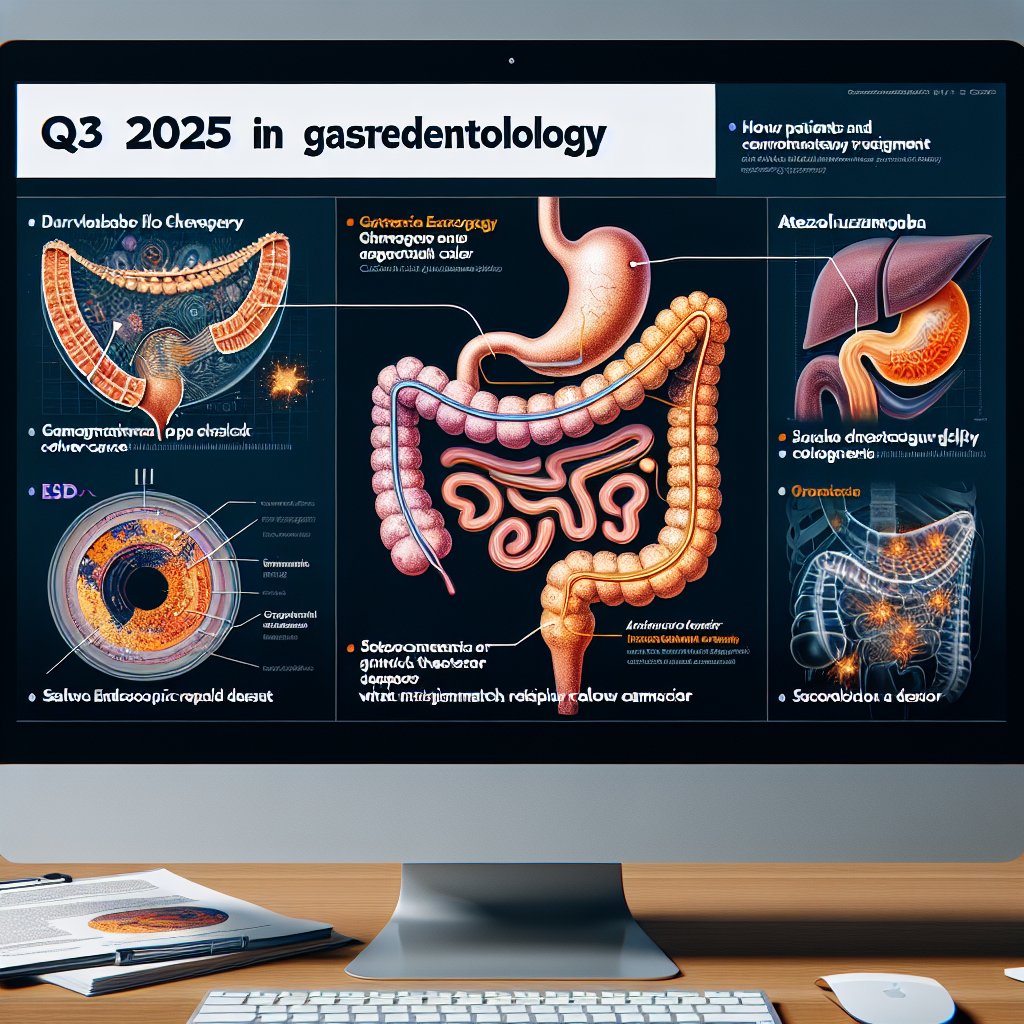
The third quarter of 2025 delivered significant advances in gastroenterology, particularly in cancer treatment and reflux management. Two major clinical trials are reshaping how doctors approach gastrointestinal cancers. The Phase 3 MATTERHORN trial showed that combining durvalumab (an immune checkpoint inhibitor) with FLOT chemotherapy significantly improves outcomes for patients with localized gastric cancer. Meanwhile, the ATOMIC trial demonstrated that adding atezolizumab to standard chemotherapy improves disease-free survival in patients with stage III colon cancer who have mismatch repair-deficient tumors.
In Barrett’s esophagus care, experts are emphasizing that this condition—which can lead to esophageal cancer—needs more specialized attention than typical reflux disease. New approaches include tailored surveillance strategies and advanced endoscopic techniques like salvage endoscopic submucosal dissection and hemostatic powders, which are showing improved safety and effectiveness for high-risk patients.
This post summarizes reporting from HCPLive: Q3 2025 Recap—Gastroenterology News and Updates. Our analysis represents IBD Movement’s perspective and is intended to help patients understand how this news may affect them. Read the original article for complete details.
What This Means for the IBD Community
You might be wondering how advances in gastric and colon cancer treatment relate to your Crohn’s disease or ulcerative colitis. The connection is more significant than you might think, and it offers several reasons for optimism.
The Immunotherapy Revolution Continues
Both breakthrough treatments mentioned in this research involve immunotherapy—specifically, immune checkpoint inhibitors. This is the same class of drugs that researchers are actively investigating for IBD treatment. While we’re not there yet, the success of these drugs in cancer treatment is accelerating research into how they might be adapted for inflammatory conditions like ours.
The fact that these immunotherapies are proving safe and effective in combination with traditional treatments is particularly encouraging. It suggests that the future of IBD care might involve sophisticated combination approaches that target inflammation through multiple pathways simultaneously.
Enhanced Surveillance and Personalized Care
The emphasis on specialized care for Barrett’s esophagus reflects a broader trend in gastroenterology toward personalized, condition-specific treatment approaches. This is excellent news for the IBD community, where we’ve long advocated for individualized care that goes beyond one-size-fits-all solutions.
People with IBD, especially those with longstanding disease, face elevated risks for certain complications, including colorectal cancer. The advances in cancer surveillance and treatment discussed in this research directly benefit our community. Better endoscopic techniques and more sophisticated monitoring approaches mean earlier detection and more effective interventions when complications do arise.
The Technology Trickle-Down Effect
Advanced endoscopic techniques like endoscopic submucosal dissection aren’t just useful for cancer treatment—they’re revolutionizing how gastroenterologists approach complex cases across all digestive conditions. These same techniques are being refined for managing IBD complications, including strictures, polyps, and areas of dysplasia that can occur in chronic inflammatory bowel disease.
Questions to Discuss with Your Gastroenterologist
These developments raise important questions you might want to explore with your IBD team:
- How do these advances in cancer surveillance apply to my IBD monitoring schedule?
- Are there new endoscopic techniques that might benefit my specific condition?
- What role might immunotherapy play in future IBD treatment, and am I a candidate for clinical trials?
- How is my gastroenterology practice staying current with these rapid advances in the field?
The Broader Research Momentum
What’s particularly exciting about these Q3 2025 developments is the momentum they represent. When we see successful clinical trials in related areas of gastroenterology, it often indicates increased funding, research interest, and clinical expertise flowing into the entire field. This creates a rising tide that lifts all boats, including IBD research and care.
The success of combination therapies in cancer treatment is already influencing IBD research protocols. Researchers are increasingly looking at how to combine different mechanisms of action—biologics, small molecules, and potentially immunotherapies—to achieve better outcomes with fewer side effects.
Real-World Impact on IBD Care
These advances also mean that your gastroenterologist is working in an increasingly sophisticated field. The techniques being developed for cancer treatment often translate into better diagnostic capabilities for IBD. Enhanced imaging, more precise endoscopic interventions, and better understanding of immune system modulation all benefit our daily care.
For those of us managing both IBD and cancer risk—whether due to medication effects, family history, or longstanding inflammation—these advances offer dual benefits. We’re seeing improvements in both the management of our primary condition and the surveillance and treatment of potential complications.
The third quarter of 2025 reminds us that gastroenterology is a rapidly evolving field, and those of us with chronic digestive conditions are the beneficiaries of this innovation. While we may not see immediate applications to IBD treatment, the foundation being laid today in cancer care, advanced endoscopy, and immunotherapy will shape our treatment options tomorrow.
These developments also reinforce the importance of staying connected with specialized IBD care. As the field advances, the gap between general gastroenterology and specialized IBD expertise may widen. Ensuring you have access to providers who understand both your specific condition and the latest advances becomes increasingly important.
Looking ahead, the success of these combination therapies and advanced techniques suggests that the future of IBD care will be more precise, more personalized, and more effective. That’s something worth celebrating, even as we continue advocating for faster progress and better access to these innovations.
The breakthroughs of Q3 2025 remind us that every advance in digestive health research has the potential to improve our lives. Whether through direct application or indirect benefits, the momentum in gastroenterology research is creating new possibilities for all of us living with chronic digestive conditions. As we’ve learned throughout our IBD journeys, hope paired with scientific progress is a powerful combination.
IBD Movement provides information for educational purposes only. This content is not intended to be a substitute for professional medical advice, diagnosis, or treatment. Always seek the advice of your physician or other qualified health provider with any questions you may have regarding a medical condition.
Related Posts

New Research Links Certain Occupations to Higher IBD Risk: What This Means for Your Career and Health
February 28, 2026
Eli Lilly’s Omvoh Shows Promise for Crohn’s Disease: What This Breakthrough Could Mean for Your Treatment Journey
February 27, 2026
Could Your Cholesterol Medication Help Your IBD? New Research Reveals Surprising Connection
February 27, 2026