Revolutionary Intestinal Ultrasound Technology Offers New Hope for IBD Monitoring and Care
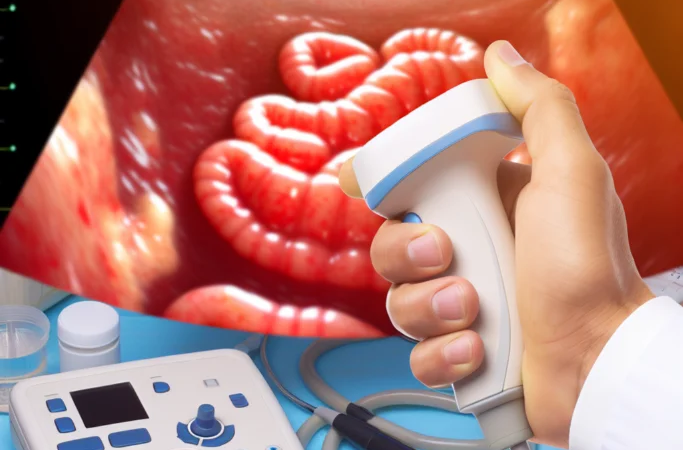
Summary of University of Miami
IBD Movement provides news analysis and insights for the IBD community. Always consult your healthcare provider for personal medical advice.
Imagine walking into your gastroenterologist’s office and getting a comprehensive view of your intestinal health in minutes, without radiation exposure, invasive procedures, or the anxiety that often comes with traditional IBD monitoring. This vision is becoming reality thanks to groundbreaking advances in intestinal ultrasound technology that could fundamentally transform how we manage inflammatory bowel disease.
For the millions of people living with Crohn’s disease and ulcerative colitis, monitoring disease activity has long meant enduring uncomfortable colonoscopies, CT scans with radiation exposure, or MRI procedures that can be time-consuming and expensive. But new developments in intestinal ultrasound are offering a gentler, more accessible path forward that could revolutionize IBD care.
Breaking News: University of Miami Highlights Intestinal Ultrasound Advantages
According to the University of Miami, intestinal ultrasound represents a significant advancement in IBD care, offering numerous advantages over traditional monitoring methods. The university’s recent announcement emphasizes how this non-invasive imaging technique is emerging as a game-changing tool for both patients and healthcare providers managing inflammatory bowel disease.
The technology allows gastroenterologists to visualize intestinal inflammation, measure bowel wall thickness, and assess disease activity in real-time during routine office visits. Unlike traditional methods that require preparation, sedation, or radiation exposure, intestinal ultrasound can be performed quickly and comfortably, providing immediate results that can inform treatment decisions on the spot.
University of Miami researchers and clinicians are highlighting how this technology addresses many of the barriers that have historically made frequent IBD monitoring challenging for patients. The procedure is painless, requires no special preparation, and can be repeated as often as necessary without safety concerns, making it an ideal tool for tracking disease progression and treatment response over time.
What This Means for Your IBD Journey: A Comprehensive Analysis
This development represents far more than just another medical technology advancement—it could fundamentally reshape the entire IBD patient experience. For those of us living with Crohn’s disease or ulcerative colitis, the implications are profound and multifaceted.
Reducing the Burden of Disease Monitoring
One of the most significant impacts of intestinal ultrasound technology lies in its potential to reduce the physical and emotional burden of IBD monitoring. Traditional colonoscopies, while essential, require extensive preparation including dietary restrictions and bowel prep medications that can be particularly challenging for people already managing IBD symptoms. The procedure itself requires sedation and time off work, creating additional stress and logistical challenges.
With intestinal ultrasound, patients could potentially have their disease activity assessed during regular office visits without any of these burdens. This means more frequent monitoring becomes feasible, allowing for earlier detection of flares and more timely treatment adjustments. For many patients, this could translate to better long-term outcomes and improved quality of life.
Personalized Treatment Optimization
The real-time nature of intestinal ultrasound opens up exciting possibilities for personalized treatment optimization. Currently, many IBD patients experience a frustrating cycle of symptom reporting, waiting for test results, and delayed treatment adjustments. With immediate ultrasound feedback, gastroenterologists could potentially adjust medications, recommend lifestyle modifications, or intensify treatment protocols during the same visit when inflammation is detected.
This immediate feedback loop could be particularly valuable for patients starting new medications or those experiencing symptom changes. Instead of waiting weeks or months between assessments, patients could have their treatment response evaluated more frequently, leading to faster optimization of their therapeutic regimen.
Empowering Patient Engagement
Visual feedback from intestinal ultrasound could significantly enhance patient understanding and engagement in their care. Many IBD patients struggle with the invisible nature of their condition—feeling sick while appearing healthy to others, or conversely, feeling well while harboring subclinical inflammation. Seeing real-time images of their intestinal health could help patients better understand their condition and the importance of medication adherence.
This visual element could also facilitate more meaningful conversations between patients and healthcare providers. When patients can see their inflammation levels improving or worsening, they may be more motivated to adhere to treatment plans or make necessary lifestyle modifications.
Addressing Healthcare Accessibility Challenges
From a healthcare system perspective, intestinal ultrasound could help address some of the accessibility challenges that plague IBD care. Colonoscopy suites are often booked months in advance, and specialized imaging like MRI enterography may not be readily available in all geographic areas. Ultrasound equipment is more widely available and could potentially be used in various healthcare settings, from gastroenterology offices to primary care clinics.
This increased accessibility could be particularly beneficial for patients in rural areas or those with limited access to specialized IBD care. It could also reduce healthcare costs by decreasing reliance on more expensive imaging modalities and procedures.
Integration with Digital Health Tools
The development of intestinal ultrasound technology aligns perfectly with the growing trend toward digital health integration in IBD care. Ultrasound results could potentially be integrated with symptom tracking apps, laboratory results, and other digital health tools to provide a comprehensive picture of disease activity over time.
This integration could enable more sophisticated predictive modeling, helping to identify patterns that precede flares or predict treatment response. For patients who are actively engaged in tracking their symptoms and health metrics, adding objective ultrasound data could provide valuable validation and additional insights into their condition.
Expert Perspectives: What Healthcare Providers Are Saying
Gastroenterologists and IBD specialists are increasingly recognizing the potential of intestinal ultrasound to complement existing monitoring strategies. Medical experts emphasize that while this technology shows tremendous promise, it’s not intended to replace all traditional monitoring methods but rather to enhance the overall approach to IBD care.
Healthcare providers note that the success of intestinal ultrasound depends heavily on operator expertise and proper training. Patients should discuss with their gastroenterologists whether their healthcare team has experience with this technology and how it might fit into their individual monitoring plan. It’s also important to understand that while ultrasound can detect inflammation and structural changes, it may not replace the need for periodic tissue sampling that can only be obtained through colonoscopy.
Experts recommend that patients view intestinal ultrasound as part of a comprehensive monitoring strategy that may also include traditional methods, laboratory tests, and symptom assessment. The goal is to create a more complete picture of disease activity while reducing the overall burden of monitoring.
Actionable Takeaways for IBD Patients
- Discuss availability with your gastroenterologist: Ask whether your healthcare team offers intestinal ultrasound and how it might benefit your specific monitoring needs
- Understand the complementary role: Learn how ultrasound monitoring would fit alongside your current testing schedule, not necessarily replace it entirely
- Consider the frequency advantage: Explore whether more frequent, comfortable monitoring could help optimize your treatment plan and catch flares earlier
- Prepare questions about interpretation: Understand what ultrasound results mean for your condition and how they’ll influence treatment decisions
- Stay informed about accessibility: Keep track of which healthcare facilities in your area are adopting this technology and factor this into your care planning
Looking Forward: A New Era of IBD Care
The advancement of intestinal ultrasound technology represents a significant step toward more patient-centered IBD care. By offering a comfortable, accessible, and immediate way to monitor disease activity, this technology has the potential to transform the relationship between patients and their healthcare providers.
While we’re still in the early stages of widespread adoption, the promise is clear: a future where IBD monitoring is less burdensome, more frequent, and more informative. This could lead to better outcomes, improved quality of life, and a more personalized approach to managing inflammatory bowel disease.
As this technology continues to develop and become more widely available, it’s essential for the IBD community to stay informed and advocate for access to these innovative tools. The future of IBD care is becoming brighter, one ultrasound image at a time.
Source: This post summarizes reporting from University of Miami. Read the original article.
Related Posts

New Research Links Certain Occupations to Higher IBD Risk: What This Means for Your Career and Health
February 28, 2026
Eli Lilly’s Omvoh Shows Promise for Crohn’s Disease: What This Breakthrough Could Mean for Your Treatment Journey
February 27, 2026
Could Your Cholesterol Medication Help Your IBD? New Research Reveals Surprising Connection
February 27, 2026