New Single-Cell Research Offers Fresh Hope for Better Crohn’s Treatments
If you’re living with Crohn’s disease, you know the exhausting cycle all too well. The unpredictable flares, the medications that help but don’t quite get you back to feeling like yourself, and the constant wondering if there will ever be something better. It’s a journey that can feel isolating, even when you’re surrounded by people who care about you but can’t fully understand what you’re going through.
What if I told you that some of the most promising answers might be hiding in the smallest places—literally at the cellular level within your own body? Recent research is revealing secrets about how our immune systems work in Crohn’s disease, and the discoveries are opening doors we didn’t even know existed.
Summary of EurekAlert!
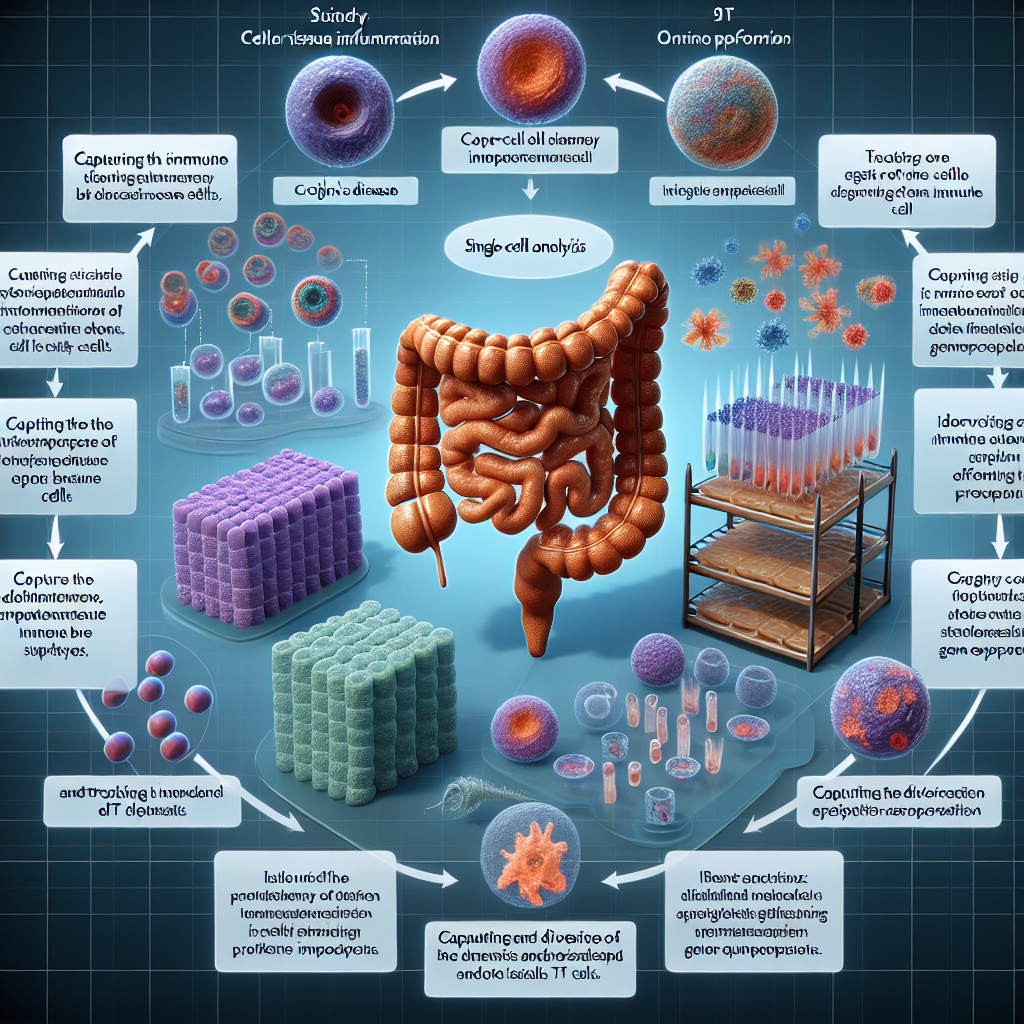
Scientists have made a significant breakthrough by examining individual T cells—a type of immune cell—in the inflamed intestinal tissue of people with Crohn’s disease. Using advanced single-cell analysis technology, researchers were able to study these cells one by one, rather than looking at them as a group. This detailed approach revealed something important: not all T cells behave the same way in Crohn’s disease.
The research showed that some T cells are “overzealous,” meaning they’re driving the chronic inflammation that causes tissue damage and symptoms in Crohn’s patients. Meanwhile, other T cells in the same area are actually working properly and performing important protective functions. This discovery is significant because it suggests that future treatments could be designed to target only the problematic cells while leaving the helpful immune cells alone to do their job.
Traditional research methods often treat immune cells as one large group, making it difficult to identify which specific cells are causing problems. This new single-cell approach allows scientists to pinpoint exactly which cells are responsible for the inflammation, potentially leading to more precise and effective treatments with fewer side effects.
This post summarizes reporting from EurekAlert!. Our analysis represents IBD Movement’s perspective and is intended to help patients understand how this news may affect them. Read the original article for complete details.
What This Means for the IBD Community
This research represents a fundamental shift in how we understand Crohn’s disease at the cellular level, and that shift could translate into real improvements in your daily life. For too long, many IBD treatments have taken a “sledgehammer” approach—suppressing large parts of the immune system to control inflammation. While these treatments can be effective, they often come with significant side effects because they’re affecting immune cells that are actually working properly.
Think about your current treatment experience. Maybe you’re on a biologic that’s helping your symptoms but making you more susceptible to infections. Or perhaps you’re taking immunosuppressants that require regular blood monitoring because they can affect your entire immune system. The precision this research points toward could mean future treatments that are like a scalpel instead of a sledgehammer—targeting only the cells that are causing problems.
From a practical standpoint, this could mean several things for people with Crohn’s disease. First, treatments might become more effective because they’re going after the root cause more precisely. Second, you might experience fewer side effects because your helpful immune cells would be left alone to protect you from infections and other threats. Third, this type of targeted approach might lead to better long-term outcomes and potentially even remission that’s more durable than what we see with current treatments.
This research also validates something many of us in the IBD community have long suspected: our bodies are incredibly complex, and what works for one person might not work for another. The discovery that even within the same person, different T cells are behaving differently, helps explain why IBD can be so unpredictable and why personalized medicine approaches are so important.
For caregivers and family members, this research offers hope for a future where your loved one might have access to treatments that are both more effective and easier to tolerate. It also underscores the importance of supporting ongoing research—every breakthrough like this builds on previous discoveries and opens new avenues for investigation.
Questions to Consider for Your Next Doctor’s Visit
While this research is still in the early stages and won’t immediately change your treatment plan, it’s worth staying informed about how the field is evolving. You might consider asking your gastroenterologist about:
- How emerging research on immune cell behavior might influence future treatment options
- Whether any clinical trials are exploring more targeted approaches for your specific situation
- How your current treatment fits into the broader landscape of IBD therapies
- What signs of progress in precision medicine they’re watching for in IBD care
The Bigger Picture in IBD Research
This single-cell research fits into a larger trend toward precision medicine in IBD care. We’re moving away from the era of “one size fits all” treatments toward an understanding that Crohn’s disease and ulcerative colitis manifest differently in different people—and now we’re learning that even within one person, the disease involves multiple types of cellular dysfunction.
This trend toward precision is already showing up in other areas of IBD care. We’re seeing more sophisticated biomarker testing, genetic analysis to predict treatment responses, and personalized monitoring approaches. The single-cell research adds another layer to this growing understanding of IBD as a highly individual disease that requires individual solutions.
What’s particularly exciting is how this research method—single-cell analysis—is being applied to other aspects of IBD. Scientists are using similar techniques to study how the microbiome interacts with immune cells, how different medications affect cellular behavior, and how the gut barrier function works at the cellular level. Each of these investigations is adding pieces to the puzzle of how we might better treat IBD in the future.
Looking Ahead with Realistic Optimism
It’s important to maintain realistic expectations about timelines. This type of research typically takes years to move from laboratory discoveries to treatments you can access in your doctor’s office. However, the foundation being laid now is solid, and the direction is promising. We’re not just hoping for better treatments—we’re systematically building the knowledge base that will make them possible.
In the meantime, this research reinforces the importance of staying engaged with your current care while remaining hopeful about future possibilities. Every person who participates in clinical trials, every researcher who dedicates their career to understanding IBD, and every patient who shares their experience is contributing to the progress that makes discoveries like this possible.
The journey with Crohn’s disease is challenging, but research like this reminds us that brilliant minds are working every day to understand your condition better and develop more effective treatments. While we wait for these advances to reach clinical practice, we can find encouragement in knowing that science is moving in the right direction—toward treatments that work with your body’s natural systems rather than against them.
IBD Movement provides information for educational purposes only. This content is not intended to be a substitute for professional medical advice, diagnosis, or treatment. Always seek the advice of your physician or other qualified health provider with any questions you may have regarding a medical condition.
Related Posts

New Research Links Certain Occupations to Higher IBD Risk: What This Means for Your Career and Health
February 28, 2026
Eli Lilly’s Omvoh Shows Promise for Crohn’s Disease: What This Breakthrough Could Mean for Your Treatment Journey
February 27, 2026
Could Your Cholesterol Medication Help Your IBD? New Research Reveals Surprising Connection
February 27, 2026