New Research Reveals How Pum2 Protein Loss Worsens IBD: Understanding the Cellular Communication Breakdown
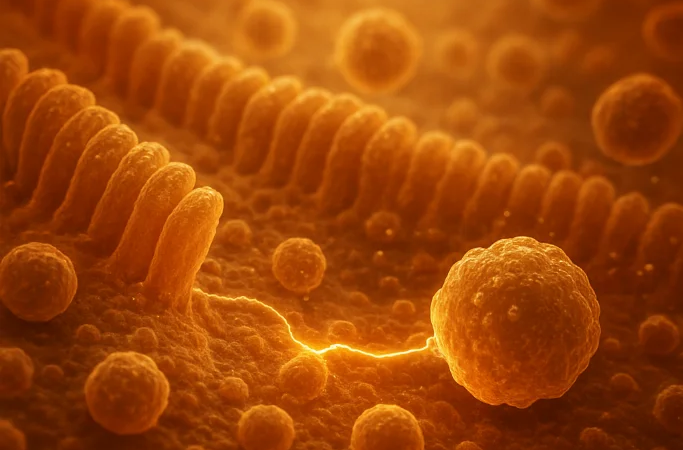
Summary of Cell Death Discovery
IBD Movement provides news analysis and insights for the IBD community. Always consult your healthcare provider for personal medical advice.
A Breakthrough Discovery That Could Change How We Understand IBD Flares
Living with inflammatory bowel disease means navigating a complex web of symptoms, treatments, and uncertainties. But what if we told you that researchers have just uncovered a crucial piece of the puzzle that explains why some people with IBD experience more severe inflammation than others? A groundbreaking study published in Cell Death Discovery has identified a specific protein called Pum2 that plays a vital role in protecting your intestinal lining from the devastating effects of chronic inflammation.
This discovery isn’t just another abstract research finding – it could fundamentally change how we understand what happens in your gut during an IBD flare and potentially lead to more targeted treatments that address the root causes of intestinal damage rather than just managing symptoms.
What the Research Reveals
According to Cell Death Discovery, researchers have identified that the loss of a protein called Pum2 significantly worsens colitis by disrupting the critical communication between two key players in your intestinal health: macrophages (immune cells that help fight infection and inflammation) and epithelial cells (the cells that line your intestinal wall).
The study demonstrates that when Pum2 levels drop, it triggers a cascade of harmful events. Most notably, it promotes a specific type of cell death called necroptosis in the epithelial cells that form the protective barrier of your intestinal lining. This process essentially causes these crucial protective cells to die off, leaving your gut more vulnerable to inflammation and damage.
The research reveals that Pum2 acts as a molecular guardian, helping to maintain proper communication between immune cells and the intestinal barrier. When this protein is absent or reduced, the normally protective relationship between macrophages and epithelial cells breaks down, leading to increased inflammation and tissue damage – hallmarks of IBD flares.
As reported by Cell Death Discovery, this disruption in cellular crosstalk appears to be a key mechanism that can transform manageable intestinal inflammation into the more severe, persistent inflammation characteristic of IBD.
What This Means for Your IBD Journey
This research represents a significant leap forward in our understanding of IBD at the cellular level, and its implications for people living with Crohn’s disease and ulcerative colitis are profound. For too long, IBD treatment has focused primarily on suppressing inflammation after it occurs, rather than preventing the underlying mechanisms that trigger severe flares in the first place.
The identification of Pum2’s protective role offers a new lens through which to view your condition. Instead of thinking about IBD simply as “chronic inflammation,” we can now understand it as a complex breakdown in cellular communication systems. When Pum2 levels are adequate, your intestinal cells and immune cells work together harmoniously to maintain a healthy gut barrier. When Pum2 is compromised, this partnership fails, leading to the cascade of inflammation and tissue damage you experience during flares.
This discovery also helps explain why IBD affects people so differently. Individual variations in Pum2 expression or function could partially account for why some people with IBD experience mild, manageable symptoms while others face severe, treatment-resistant disease. Understanding these individual differences at the molecular level could eventually lead to personalized treatment approaches tailored to your specific cellular profile.
Perhaps most importantly, this research opens the door to entirely new therapeutic strategies. Rather than simply suppressing your immune system broadly – which is how many current IBD medications work – future treatments might focus on restoring proper Pum2 function or supporting the macrophage-epithelial communication pathways that Pum2 helps maintain. This could potentially lead to more effective treatments with fewer side effects.
The concept of necroptosis – the specific type of cell death promoted when Pum2 is lost – also provides new targets for intervention. If researchers can develop ways to prevent this destructive cell death process, it might be possible to preserve intestinal barrier function even during inflammatory episodes, potentially reducing the severity and duration of flares.
For many people with IBD, one of the most frustrating aspects of the condition is its unpredictability. Why do flares happen when they do? Why do some episodes resolve quickly while others persist for months? The Pum2 research suggests that monitoring the health of these cellular communication pathways might eventually provide better predictive tools for understanding when flares are likely to occur and how severe they might become.
This research also validates what many in the IBD community have long suspected – that the condition involves complex interactions between multiple body systems. The finding that immune cells and intestinal barrier cells must work together, with proteins like Pum2 facilitating their communication, reinforces the importance of holistic approaches to IBD management that consider the gut ecosystem as an interconnected whole.
Expert Perspective and Clinical Implications
While this research is still in early stages, gastroenterologists and IBD specialists are likely to be very interested in how Pum2 function might be assessed and potentially targeted in clinical practice. This type of mechanistic research typically takes several years to translate into practical treatments, but it provides crucial foundational knowledge for drug development.
When discussing this research with your healthcare team, consider asking about how emerging understanding of cellular communication pathways might influence your treatment plan in the future. While Pum2-targeted therapies aren’t yet available, understanding these mechanisms can help you and your doctor make more informed decisions about current treatment options and clinical trial participation.
Experts in the field emphasize that this type of research underscores the importance of maintaining good overall intestinal health through proven strategies like stress management, appropriate nutrition, and adherence to prescribed medications while we await more targeted therapies.
Actionable Takeaways
- Stay informed about emerging research: Understanding new discoveries like the Pum2 findings can help you have more informed discussions with your healthcare team about future treatment possibilities.
- Discuss cellular health with your doctor: Ask about strategies that support overall intestinal barrier function and immune cell health, as these may indirectly support the pathways identified in this research.
- Consider clinical trial opportunities: As research progresses, trials targeting cellular communication pathways may become available for people with treatment-resistant IBD.
- Focus on proven barrier-supporting strategies: While waiting for Pum2-targeted treatments, continue emphasizing approaches known to support intestinal barrier health, including stress reduction and appropriate nutrition.
- Track your symptoms systematically: Better understanding of cellular mechanisms may eventually lead to more precise symptom tracking tools that could predict flares based on barrier function markers.
Looking Forward: Hope for More Targeted IBD Care
The discovery of Pum2’s crucial role in IBD represents exactly the kind of breakthrough the community has been waiting for – research that doesn’t just describe what happens during inflammation, but explains why it happens and points toward specific targets for intervention. While it may be several years before this knowledge translates into new medications you can access, it represents genuine progress toward more personalized, effective IBD care.
This research reminds us that every advance in understanding brings us closer to treatments that work with your body’s natural healing mechanisms rather than simply suppressing them. The future of IBD care likely lies in supporting and restoring the complex cellular partnerships that keep your gut healthy, and the Pum2 discovery is an important step in that direction.
What questions does this research raise for you about your own IBD journey? Share your thoughts and experiences with cellular-level IBD research in the comments below – your insights help strengthen our entire community’s understanding of these complex conditions.
Source: This post summarizes reporting from Cell Death Discovery. Read the original article.