Understanding CT Scans for Crohn’s Disease: What Every Patient Should Know About This Essential Diagnostic Tool
Summary of Unknown
IBD Movement provides news analysis and insights for the IBD community. Always consult your healthcare provider for personal medical advice.
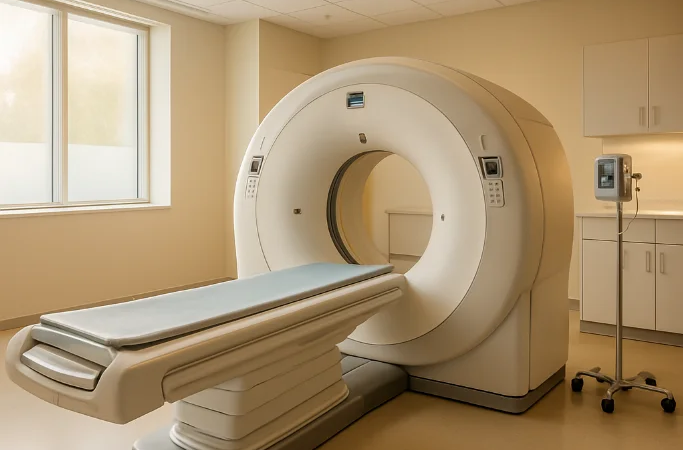
If you’re living with Crohn’s disease or experiencing symptoms that might indicate inflammatory bowel disease (IBD), you’ve likely heard your healthcare provider mention CT scans. These powerful imaging tools have become increasingly important in the diagnosis and management of Crohn’s disease, offering doctors a detailed window into what’s happening inside your digestive system. Understanding how CT scans work and what they can reveal about your condition empowers you to be a more informed participant in your healthcare journey.
What Recent Information Tells Us About CT Scans and Crohn’s Disease
According to recent medical information, CT scans have proven highly effective at detecting the characteristic signs of Crohn’s disease within the digestive tract. These sophisticated imaging studies can identify key indicators of the condition, including bowel wall thickening and areas of active inflammation throughout the intestines. The technology allows healthcare providers not only to make initial diagnoses but also to assess how extensive the disease has become and which specific areas of the digestive system are most affected.
The ability of CT scans to visualize these changes represents a significant advancement in IBD care, as it provides doctors with detailed, three-dimensional images of the intestinal tract without requiring invasive procedures. This imaging capability has become particularly valuable for tracking disease progression and determining the most appropriate treatment approaches for individual patients.
The Deeper Implications for IBD Patients: Why This Matters More Than You Might Think
For people living with Crohn’s disease, the role of CT scans extends far beyond simple diagnosis – these imaging studies have fundamentally changed how we approach IBD management and what patients can expect from their care journey. Understanding the broader implications of this diagnostic tool can help you better navigate your own healthcare decisions and conversations with your medical team.
Revolutionizing Early Detection and Intervention
One of the most significant impacts of CT scan technology in Crohn’s disease care is the ability to detect inflammation and complications before they become severe enough to cause obvious symptoms. This early detection capability means that healthcare providers can often intervene with appropriate treatments before the disease causes irreversible damage to the intestinal tract. For patients, this translates to potentially avoiding some of the more serious complications that can arise from uncontrolled Crohn’s disease, such as strictures, abscesses, or fistulas.
The detailed imaging also allows doctors to identify the specific pattern and location of your disease, which is crucial for developing personalized treatment strategies. Crohn’s disease can affect any part of the digestive tract from mouth to anus, and the location of inflammation often influences which medications will be most effective. By providing this detailed roadmap of your individual disease pattern, CT scans help ensure that you receive the most targeted and effective treatment possible.
Monitoring Treatment Response and Disease Progression
Perhaps even more important than initial diagnosis is the role CT scans play in ongoing disease management. These imaging studies allow your healthcare team to objectively measure how well your current treatment is working by comparing scans taken at different time points. This capability is particularly valuable because the symptoms you experience don’t always correlate perfectly with the level of inflammation present in your intestines – you might feel relatively well while still having active inflammation, or conversely, you might experience symptoms even when inflammation is well-controlled.
This objective measurement of disease activity helps doctors make more informed decisions about when to adjust medications, when to consider more aggressive treatments, and when it might be safe to step down therapy. For patients, this means less guesswork about whether your treatment is truly working and more confidence in the treatment decisions being made.
Avoiding More Invasive Procedures
The comprehensive information provided by CT scans often reduces the need for more invasive diagnostic procedures like colonoscopies or exploratory surgeries. While these procedures still have important roles in IBD care, CT scans can answer many clinical questions without requiring the preparation, sedation, and recovery time associated with endoscopic procedures. This is particularly beneficial for patients who may need frequent monitoring or who have medical conditions that make invasive procedures riskier.
Surgical Planning and Post-Operative Care
For patients who may need surgical intervention, CT scans provide surgeons with detailed anatomical information that helps them plan the most effective and least invasive surgical approach. The scans can identify not only the areas that need surgical attention but also help surgeons understand the relationship between diseased areas and surrounding healthy tissue, blood vessels, and other important structures.
Following surgery, CT scans play a crucial role in monitoring healing and detecting potential complications early. This post-operative monitoring capability helps ensure that any issues are identified and addressed quickly, potentially preventing more serious complications and improving overall surgical outcomes.
Expert Perspectives on CT Scan Technology in IBD Care
Gastroenterologists and radiologists increasingly emphasize the importance of high-quality imaging in modern IBD management. Medical experts typically recommend that patients work with healthcare providers who have experience interpreting IBD-related imaging studies, as the subtle changes associated with Crohn’s disease require specialized knowledge to identify and interpret accurately.
Healthcare professionals also stress the importance of discussing the timing and frequency of CT scans with your medical team. While these studies provide valuable information, they do involve radiation exposure, so the benefits must be weighed against potential risks. Your doctor can help you understand when CT scans are most beneficial for your specific situation and work with you to develop an appropriate monitoring schedule that maximizes the diagnostic benefits while minimizing unnecessary radiation exposure.
Actionable Takeaways for IBD Patients
- Prepare thoughtful questions for your next appointment about how CT scans might fit into your specific care plan and what information they could provide about your disease status
- Keep a record of all imaging studies you’ve had, including dates and locations, to help your healthcare team track changes over time and avoid unnecessary repeat scans
- Discuss radiation exposure concerns openly with your doctor, especially if you’re young or may need frequent monitoring, to ensure you’re receiving appropriate care while minimizing risks
- Ask about preparation requirements for CT scans in advance, as some studies may require contrast agents or specific dietary preparations that work best when planned ahead
- Request copies of your imaging reports and ask your healthcare provider to explain the findings in terms you can understand, helping you become a more informed participant in your care
Looking Forward: The Future of IBD Imaging and Your Care
The integration of CT scan technology into routine IBD care represents just one example of how medical advances continue to improve outcomes for people living with Crohn’s disease and ulcerative colitis. As imaging technology continues to evolve, we can expect even more precise and detailed information about disease activity, treatment response, and long-term prognosis.
For patients, this means greater confidence in diagnosis and treatment decisions, more personalized care approaches, and potentially better long-term outcomes. The key is staying engaged with your healthcare team, asking questions about how these diagnostic tools apply to your specific situation, and working together to develop a comprehensive care plan that takes advantage of all available resources.
We encourage you to share your experiences with CT scans and other diagnostic procedures in the comments below. Your insights and questions help build our community’s collective understanding and support network, making the IBD journey a little easier for everyone.
Source: This post summarizes reporting from Unknown. Read the original article.