World IBD Day: You are not alone.
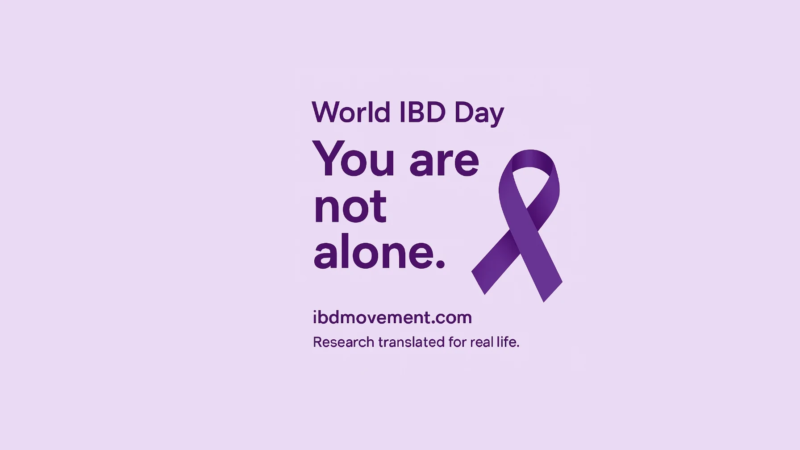
Today is World IBD Day, and I’ve been thinking about what that means after living with Crohn’s disease since 2003. I just want people to know: you are not alone.
The numbers tell part of the story. One in 100 people live with Crohn’s disease or ulcerative colitis. That’s roughly 3.3 million Americans, and about 10 million people worldwide. When I was diagnosed in 2003, those statistics felt abstract. What mattered was that I felt completely isolated, like I was the only 33-year-old dealing with unpredictable symptoms while trying to remodel my first house.
I wasn’t alone then, and neither are you now.
IBD Affects Every Part of Life
The digestive symptoms get most of the attention — and for good reason. I’ve spent enough time managing flares, navigating dietary changes, and timing my day around bathroom access to know how central those challenges are. But IBD reaches into every corner of life in ways that people without the condition often don’t see.
I’ve made career decisions based on health insurance coverage. I’ve planned vacations around infusion schedules. I’ve had conversations with partners about what chronic illness means for a relationship. I’ve watched friends move through life milestones while I was managing a flare or recovering from surgery.
IBD affects sleep patterns, energy levels, and mental health. It influences financial planning, travel decisions, and social activities. It shapes how I think about risk, how I approach new treatments, and how I balance the hype with realism when reading research studies.
This isn’t unique to my experience. It’s the reality for millions of people navigating inflammatory bowel disease.
Finding Community in Shared Experience
Over the years, I’ve learned that isolation often comes not from being alone with the condition, but from feeling like others don’t understand what living with IBD actually involves. The unpredictability. The way symptoms can derail plans without warning. The complexity of treatment decisions. The fatigue that goes beyond being tired.
That’s part of why I started IBD Movement. Having spent two decades reading research papers, trying different biologics, and learning to navigate this condition, I wanted to create a space where the medical information was accessible but not dumbed down. Where the tone was realistic but not discouraging. Where patients could get the kind of information that helps with actual decision-making.
I’ve been on Remicade for years and recently transitioned to Rinvoq in 2026. I’ve dealt with fistulizing disease. I’ve read more research studies than most patients, but I’m still a patient — not a doctor. That perspective shapes everything U publish here.
What IBD Movement Offers
The core of what I do is translate medical research and clinical developments into language that makes sense for people living with IBD. When a Phase 2 trial reports results, I want to know what that actually means for my treatment options and timeline. When new real-world data comes out about a medication I’m considering, I want to understand both the benefits and the limitations.
I don’t promise cures or oversell early research. I don’t use words like “game-changing” for studies that are years away from clinical application. What I do is provide the kind of straightforward, calibrated information that I wished I had access to when I was first diagnosed.
My weekly digests cover the latest research developments, always with clear clinical stage markers so you know whether something is preclinical, in Phase 1 trials, or already FDA-approved. I focus on what the research actually shows, what the limitations are, and what it means for treatment decisions right now.
The goal isn’t to create false or unrealistic expectations. It’s to give people the information they need to be informed participants in their own care.
The Reality of Not Being Alone
When I say you’re not alone, I don’t mean that in a feel-good, everything-will-be-fine way. Living with IBD is challenging. The symptoms are real, the treatment decisions are complex, and the uncertainty can be exhausting. Acknowledging that doesn’t make the condition worse — it makes the experience more honest.
What “not alone” means is that there are millions of people navigating similar challenges. People who understand why you need to know where the bathroom is in every new location. People who have had to explain to employers why a chronic condition doesn’t mean you can’t do your job effectively. People who have learned to balance optimism about new treatments with realistic expectations about timelines and outcomes.
It means there are resources, communities, and information sources designed by people who understand what you’re dealing with because they’re dealing with it too.
Moving Forward Together
World IBD Day happens once a year, but the reality of living with inflammatory bowel disease is daily. The purple ribbon represents awareness, but awareness alone doesn’t change outcomes. What changes outcomes is access to accurate information, effective treatments, and communities that understand the full scope of what this condition involves.
I’ve been managing Crohn’s disease for over two decades. The treatment landscape has changed dramatically in that time — mostly for the better. But what hasn’t changed is the importance of having reliable information and knowing that other people are navigating similar challenges.
If you’re newly diagnosed, overwhelmed by treatment options, or just looking for a source of IBD information that doesn’t oversell or underexplain, that’s what I am here for. Not as an expert talking down to patients, but as a person who has been where you are and understand what kind of information actually helps.
You are not alone in this. The numbers prove it, but more importantly, the community proves it every day.