AI Revolution in IBD Care: How Artificial Intelligence Could Transform Your Treatment Journey
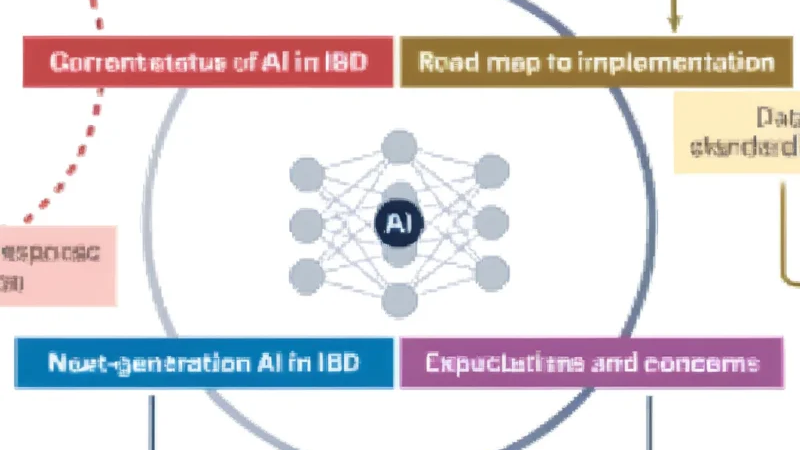
Summary of Nature Reviews Gastroenterology & Hepatology
IBD Movement provides news analysis and insights for the IBD community. Always consult your healthcare provider for personal medical advice.
A New Era of Personalized IBD Care
Imagine walking into your gastroenterologist’s office and receiving a treatment plan that’s been precisely tailored to your unique IBD pattern, predicted flare-ups, and optimal medication timing—all powered by artificial intelligence analyzing thousands of similar cases. This isn’t science fiction anymore. A groundbreaking perspective published in Nature Reviews Gastroenterology & Hepatology reveals how AI is poised to revolutionize inflammatory bowel disease care, offering hope for more accurate diagnoses, personalized treatments, and better quality of life for people living with Crohn’s disease and ulcerative colitis.
For the millions of us navigating the unpredictable waters of IBD, this technological advancement represents more than just medical innovation—it’s a beacon of hope for gaining greater control over our condition and reclaiming our lives from the uncertainty that IBD often brings.
Breakthrough Research Reveals AI’s Potential in IBD Management
According to Nature Reviews Gastroenterology & Hepatology, leading researchers Iacucci and colleagues have outlined a comprehensive roadmap for how artificial intelligence is already beginning to transform IBD care. The perspective highlights several emerging applications that could fundamentally change how we approach diagnosis, treatment monitoring, and long-term management of inflammatory bowel diseases.
The research team identifies key areas where AI is showing remarkable promise, including enhanced endoscopic imaging analysis, predictive modeling for disease progression, and personalized treatment selection. These applications aren’t theoretical—many are already being tested in clinical settings and showing encouraging results that could benefit patients in the near future.
The authors emphasize that successful implementation of AI in IBD care requires careful consideration of both the technical capabilities and the practical challenges of integrating these tools into existing healthcare systems. They stress the importance of ensuring that AI applications are not only scientifically sound but also accessible and beneficial to patients across diverse healthcare settings.
What This AI Revolution Means for Your IBD Journey
The implications of AI integration in IBD care extend far beyond the research laboratory—they could fundamentally transform how you experience living with Crohn’s disease or ulcerative colitis. One of the most exciting prospects is the potential for truly personalized medicine. Currently, finding the right treatment often involves a frustrating trial-and-error process that can take months or even years. AI could analyze your specific disease patterns, genetic markers, lifestyle factors, and response history to predict which treatments are most likely to work for you from the start.
Consider the daily uncertainty that many of us face: Will today be a good day or a flare day? AI-powered monitoring systems could potentially analyze subtle patterns in your symptoms, biomarkers, and even wearable device data to provide early warnings about impending flares. This predictive capability could allow you to take preventive measures before symptoms become severe, potentially avoiding hospitalizations and maintaining better quality of life.
The technology also promises to revolutionize how doctors interpret your colonoscopy results. AI-enhanced endoscopic imaging can detect subtle inflammatory changes that might be missed by the human eye, leading to earlier intervention and more precise monitoring of your disease activity. This could mean fewer missed diagnoses, more accurate assessment of treatment effectiveness, and better long-term outcomes.
Another transformative aspect is the potential for continuous, remote monitoring. Instead of relying solely on periodic clinic visits and your ability to remember and communicate symptoms accurately, AI systems could track your condition continuously through various data sources. This could include analyzing patterns in your reported symptoms through smartphone apps, monitoring biomarkers through at-home testing devices, or even detecting changes in your voice patterns or movement that might indicate disease activity.
The psychological impact of these advances shouldn’t be underestimated. Living with IBD often means feeling like you’re constantly reacting to your disease rather than staying ahead of it. AI could shift this dynamic, giving you and your healthcare team the tools to be more proactive in managing your condition. The sense of empowerment that comes from having better predictive information and more personalized treatment options could significantly improve your mental health and overall well-being.
However, it’s important to understand that AI won’t replace the human elements of IBD care that are so crucial to successful treatment. The doctor-patient relationship, the importance of individualized care plans, and the need for compassionate support will remain central to IBD management. Instead, AI will enhance these human elements by providing healthcare providers with more sophisticated tools and insights to better serve their patients.
The technology also raises important questions about data privacy and equity in healthcare access. As these AI systems rely on vast amounts of patient data to function effectively, ensuring that your personal health information remains secure and that you maintain control over how it’s used will be crucial. Additionally, we must work to ensure that AI-powered IBD care doesn’t exacerbate existing healthcare disparities but instead helps make high-quality care more accessible to all patients.
Expert Perspectives on AI Implementation
Healthcare professionals specializing in IBD are cautiously optimistic about AI’s potential while emphasizing the importance of rigorous validation and thoughtful implementation. Experts consistently stress that AI tools must be thoroughly tested across diverse patient populations to ensure they work effectively for people with different disease presentations, backgrounds, and healthcare settings.
Gastroenterologists recommend that patients stay informed about these developments and discuss with their healthcare teams how emerging AI technologies might impact their individual care plans. It’s important to ask your doctor about any AI-powered tools being used in your treatment and understand how they might affect your diagnosis, monitoring, or treatment decisions.
Many experts also emphasize that while AI shows tremendous promise, it’s crucial to maintain realistic expectations about timelines for widespread implementation. The integration of AI into routine IBD care will likely be gradual, with some applications becoming available sooner than others.
Actionable Takeaways for IBD Patients
- Stay informed about AI developments in IBD care by following reputable medical sources and discussing new technologies with your healthcare team during appointments.
- Consider participating in research studies that are evaluating AI tools for IBD management, as this can provide early access to innovative treatments while contributing to scientific advancement.
- Maintain detailed symptom tracking using digital tools, as this data could become increasingly valuable for AI-powered treatment optimization in the future.
- Discuss data privacy concerns with your healthcare providers and understand how your health information might be used in AI systems.
- Advocate for equitable access to AI-powered IBD care by supporting policies and initiatives that ensure these technologies benefit all patients, regardless of their healthcare setting or economic status.
Looking Toward an AI-Enhanced Future
The integration of artificial intelligence into IBD care represents one of the most promising developments in gastroenterology in recent decades. While we’re still in the early stages of this technological revolution, the potential benefits for people living with Crohn’s disease and ulcerative colitis are substantial and exciting.
As these AI applications continue to develop and mature, they promise to make IBD care more precise, predictive, and personalized than ever before. This could mean fewer flares, more effective treatments, and ultimately, a better quality of life for millions of people worldwide living with inflammatory bowel disease.
The journey toward AI-enhanced IBD care will require collaboration between researchers, healthcare providers, technology developers, and most importantly, patients themselves. By staying engaged with these developments and advocating for responsible implementation, we can help ensure that artificial intelligence truly serves to improve the lives of everyone in the IBD community.
Source: This post summarizes reporting from Nature Reviews Gastroenterology & Hepatology. Read the original article.